Topical Vitamin C serves as an indispensable cofactor for lysyl and prolyl hydroxylase enzymes—the biochemical machinery essential for stabilizing the collagen triple-helix molecule. However, pure L-Ascorbic Acid requires an acidic pH below 3.5 to penetrate the skin, causing severe burning in barrier-compromised patients.
The Duke Patent Synergy: L-Ascorbic, Ferulic & Vitamin E
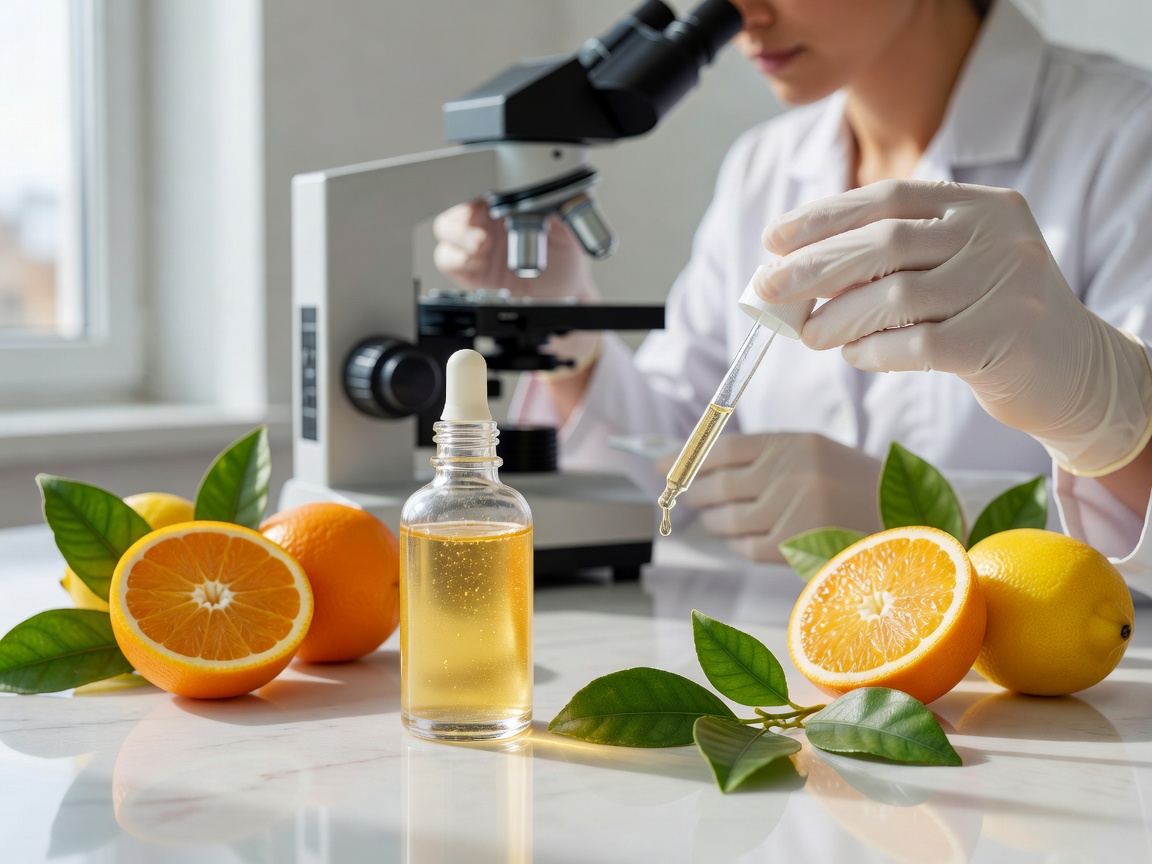
Groundbreaking dermatological patents established that formulating 15% pure L-Ascorbic Acid with 1% Alpha-Tocopherol (Vitamin E) and 0.5% Ferulic Acid multiplies photoprotective efficacy eightfold. Ferulic acid acts as an electron donor, stabilizing ascorbic acid from degrading into yellow dehydroascorbic acid (DHAA).
The Lipid-Soluble Breakthrough: THD Ascorbate
Tetrahexyldecyl (THD) Ascorbate is modified with four branched fatty acid chains. Because the stratum corneum is a lipophilic matrix, THD penetrates up to 50 times more effectively into the dermis than water-soluble ascorbic acid at a skin-neutral pH of 6.0, entirely bypassing acid irritation.